Friday 16th October is Restart a Heart Day 2026.
 Restart a Heart Day is an annual initiative led by the Resuscitation Council UK and supported by organisations such as the British Heart Foundation, the Association of Ambulance Chief Executives and NHS England. It aims to encourage more people across the UK to learn CPR so they can act fast and save lives.
The annual first aid campaign is so important because, as the Resuscitation Council UK explains:
“Survival rates from out-of-hospital cardiac arrest remain stubbornly low in the UK, with fewer than one in 10 people surviving.”
They encourage individuals, organisations, businesses and schools to take part in Restart a Heart Day by learning vital, life-saving CPR skills.
They say that learning CPR means “contributing to a society where more people know how to save a life, and can make a real difference in the ultimate medical emergency.”
Resuscitation Council UK tour UK for Restart a Heart Day
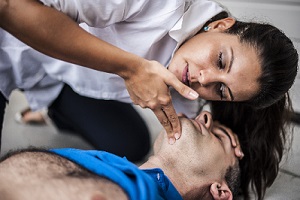 For Restart a Heart Day 2026, the Resus Council are travelling across the UK, taking their Resus Annie first aid training mannequin on tour to visit areas of the country where, statistically, people are less likely to survive an out-of-hospital cardiac arrest. They aim to meet members of the public and share life-saving skills.
They also want to have conversations to raise awareness of cardiac arrest and tackle misconceptions about giving CPR and using life-saving automated external defibrillators (AEDs).
The tour kicked off at the start of the month, with Resus Annie still due to visit Cardiff, Glasgow, Belfast and Manchester.
In addition, Restart a Heart Day sees a number of CPR training events and supporting resources available to increase awareness, understanding and education around life-saving CPR and first aid skills. Individuals, organisations and businesses can also donate to the Resuscitation Council to support their campaigning work.
Take action for Restart a Heart Day
The Resuscitation Council are also urging people to write to their local MPs to push policy-makers to initiative some key, life-saving changes. These include:
- CPR training in schools – Asking governments and local authorities across the UK to ensure that CPR is being properly taught in all secondary schools
- CPR training for drivers – Asking decision-makers to ensure that CPR training is included as part of the driving license practical test.
- Recovery after cardiac arrest – Asking decision-makers to listen to survivors and ensure that recovery becomes a right, not a postcode lottery.
Those who are already trained in CPR can register themselves as ‘ResusReady’. This means their name will be added to the Resuscitation Council’s ResusReady map, which shows people how many individuals in their area are trained and ready to step in to help save a life following a cardiac arrest.
Connecting communities to life-saving defibrillators
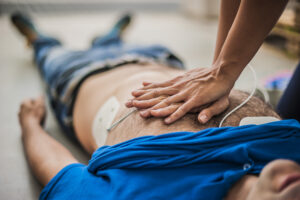 The British Heart Foundation (BHF) is also marking Restart a Heart Day 2026 by encouraging communities in need of defibrillators to apply for a free one via their Community Defibrillator Funding Programme.
They highlight the fact that the chances of surviving a cardiac arrest are significantly increased if a defibrillator is used at the scene.
For every minute that passes without CPR and defibrillation following a cardiac arrest, an individual’s chances of survival reduces by up to 10%.
There are publicly available defibrillators located across the UK, but access is not equal in all postcodes. The BHF says their research shows that, in the most disadvantaged areas, the nearest 24/7 accessible defibrillator could be a round-trip of over 1km away.
Individuals, businesses and communities can help improve survival rates by locating their nearest defibrillator or installing a defibrillator and then registering the life-saving device on The Circuit so it can be found by others and used in an emergency.
The BHF urges anyone who has a defibrillator to ensure it can be accessed by the public 24/7.
They call on everyone across the UK to “work together to build life-saving communities and help increase out-of-hospital cardiac arrest survival rates.”
Life-saving CPR training
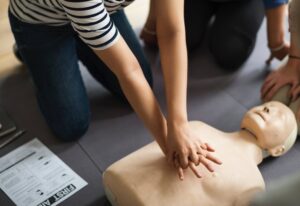 First Response Training is a leading national training provider.
They deliver a wide range of training in health, safety, first aid, fire safety, food safety, health and social care, mental health and welfare and other special focus topics for all industry sectors.
They have over 29 years’ experience in delivering first class first aid training services, including First Aid at Work, Emergency First Aid at Work, Paediatric First Aid and Basic Life Support courses, all of which include CPR training and information and training on the use of defibrillators.
They can also provide specialist first aid training for school pupils.
A trainer from FRT says:
“Every second counts when someone has experienced a cardiac arrest. That’s why it’s so vital that as many people as possible are competent and confident to provide early and effective CPR and defibrillation. It really can be the difference between life and death.
“There’s lots of ways in which you can learn CPR, including lots of free avenues. Undergoing a more in-depth first aid training course will really help to cement your knowledge, skills and confidence, however, and also teach you other important first aid skills, such as the recovery position, how to respond to choking and the initial treatment for things such as burns, scalds, fractures and bleeding.
“Meanwhile, defibrillators should be made easily accessible to all, as they really can save lives. Although you do not need training to use a defibrillator successfully, it’s good to be familiar with one and how they work, and our courses cover this and include AED training models.
“However, you never know if one of these life-saving machines will be available. It’s therefore vitally important for as many people as possible to learn essential life-saving CPR skills and other first aid techniques so that they can act quickly and help people in an emergency.
“First aid training really is so valuable and we have always believed this wholeheartedly, previously offering free community first aid training for parents and carers and lessons for school pupils.”
For a simple guide to responding to an emergency and providing essential, life-saving CPR, you can now download our free guide ‘How to Respond to an Emergency.’
You can check the location of your nearest defibrillator online.
If you are a defibrillator guardian, make sure you register it online with The Circuit – the National Defibrillator Network.
For more information on the training that FRT can provide, please call them today on freephone 0800 310 2300 or send an e-mail to info@firstresponsetraining.com.