
A petition calling for mandatory ADHD training in schools has reached over 10,000 signatures in just two weeks, meaning the government must issue a formal written response.
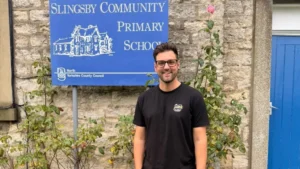
The parliamentary petition was launched by Ryan Swain, a 36-year-old from Malton who grew up with undiagnosed ADHD and Tourette’s syndrome. He was permanently excluded from mainstream education when he was 14 years old.
He started the campaign to reduce the stigma around ADHD and wider neurodiversity and encourage earlier support for young people.
Mr Swain believes that receiving understanding and appropriate support earlier in his life could have made a significant difference to his childhood and his experiences in education, where he says he was written off as “naughty, disruptive and difficult.”
ADHD training for pupils, staff and parents

Figures suggest that around 8% of the UK population have ADHD, while around 1 in 7 people are neurodiverse (15%).
ADHD stands for attention deficit hyperactivity disorder and it is a neurodevelopmental condition which can affect how a person focuses. Children and young people with ADHD may present with symptoms such as inattention, high energy levels and difficulty controlling impulses.
Mr Swain’s petition calls for age-appropriate education to help pupils, staff and parents all recognise and understand neurodivergent differences.
He explains:
“When I was at school, I was labelled naughty, disruptive and difficult.
“Nobody explained ADHD to me. Nobody helped me understand why I struggled with things that other children seemed to manage.
“I was excluded from mainstream education at 14. It took years for me to understand myself.”
ADHD training would help ‘every child who feels misunderstood’
 Swain currently delivers free ADHD awareness talks to schools, colleges, alternative provision settings and community organisations as part of his You, Me & ADHD initiative, which he says helps people understand ADHD through lived experiences, humour and honesty.
He said that he felt “incredibly emotional” about reaching the 10,000 signatures milestone, and knowing he would receive a formal response to his petition from the UK government.
He told the BBC his campaign was for “every child who feels misunderstood, every parents fighting to be heard and every teacher who wants to help but hasn’t been given the knowledge or resources.”
He added:
“We teach young people about physical health, relationships, drugs and alcohol. Why shouldn’t they receive age-appropriate education about ADHD, autism and other forms of neurodivergence?”
He now aims to reach 100,000 signatures. This milestone would mean that his petition has to be considered by the House of Commons Petitions Committee for debate in Parliament.
Neurodiversity training and support
 First Response Training (FRT) is a leading national training provider delivering courses in subjects such as health and safety, first aid, fire safety, manual handling, food safety, mental health, health and social care, safeguarding, neurodiversity and more.
They are a Disability Confident Committed Employer and were recently awarded INclusive Worcestershire Leader status. This means they are a fair, equitable and inclusive employer who is proactively and continuously striving for positive change.
The national training provider was one of the first in the country to be approved to offer essential training in line with the Oliver McGowan Mandatory Training on Learning Disability and Autism. They also deliver a range of neurodiversity training, including ADHD Awareness training.
FRT have recently co-developed a focused training session on Neurodiversity and Inclusive Practice in Education, which will be co-delivered with Experts with Lived Experience and which they have developed and tested extensively in partnership with The Tapscott Learning Trust, an award-winning trust based in London.
The Neurodiversity and Inclusive Practice in Education programme is a co-produced school improvement programme designed to help schools strengthen inclusive practice and improve outcomes for neurodivergent and SEND pupils, whether formally diagnosed or not.
Neurodiversity training follows a needs-led approach
 Developed by education leaders and Experts with Lived Experience of autism, ADHD and PDA, the programme supports schools to improve attendance, engagement, wellbeing, belonging and attainment through adaptive teaching, reasonable adjustments and whole-school culture change.
In line with the Schools White Paper and planned National Inclusion Standards, it moves thinking away from a diagnosis-led approach to a pure needs-led approach, and making schools accessible and inclusive by default.
It also supports schools to develop their Inclusion Strategies and strengthen collaboration with local education, health and care services, helping to create environments where every child feels understood, valued and able to thrive.
Learning outcomes include:
- Explain neurodiversity and common co-occurring profiles
- Recognise early indicators of dysregulation and unmet need
- Understand why autism and other neurodiverse conditions are described as
- Invisible
- Reflect on your own values, beliefs and practice
- Recognise potential differences, strengths and challenges for neurodiverse pupils
- Identify reasonable adjustments and ways to adapt your practice
- Record the impact
School staff ‘develop a deeper understanding of neurodiversity’
Daniel Mansfield, Training Hub Director at The Tapscott Learning Trust, explained:
“One of the most powerful aspects of this programme is that it moves beyond awareness and focuses on meaningful change in practice.
“Throughout the pilot phase, we saw staff develop a deeper understanding of neurodiversity, reflect honestly on the barriers pupils face and identify practical adaptations that could be implemented immediately.
“The ‘One Child in Mind’ approach helps bring the learning to life, ensuring discussions remain rooted in the experiences of real children rather than abstract theory.
“What stood out most was the impact of learning directly from Experts with Lived Experience, which consistently challenged assumptions, increased empathy and inspired action. Schools left not only with greater confidence and understanding, but with tangible plans to improve inclusion, strengthen relationships and create learning environments where all children can thrive.”
Download our flyer to find out more about Neurodiversity and Inclusive Practice in Education.
For further information on other types of neurodiversity training, visit FRT’s webpage or download the brochure.
You can contact FRT via freephone 0800 310 2300, send an e-mail to info@firstresponsetraining.com or submit an online enquiry.