
Baroness Casey, Chair of the Independent Commission on Adult Social Care, has said the NHS “are unable to sufficiently treat and look after people with learning disabilities.”
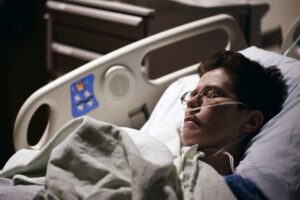 Speaking to ITV News’ Dan Hewitt earlier this month, Baroness Casey said she believed that the NHS was failing people with learning disabilities and heavily criticised the attitudes of health professionals, whom she claimed “do not see them” and “do not hear them.”
Baroness Casey has been commissioned by the UK government to lead a wholesale independent review of adult social care in England.
In the wide-ranging interview with ITV, she was asked why she believed people with learning disabilities still die, on average, 20 years younger than the rest of the population.
She said it was partly down to a lack of adequate care and treatment across the NHS, saying that hospitals were “unable to sufficiently treat and look after people with learning disabilities.”
After giving the example of a woman with profound learning disabilities who went into hospital following a stroke and who was denied the support of her carers – the only people who could fully understand her – she said the healthcare system has “got a one-track mind: it’s a medical condition, if I can’t medically treat you, it’s game over, not our responsibility anymore.”
Drive to improve social care “a great gift”
Baroness Casey also criticised privatisation in the social care sector, explaining:
“You’ve got, in some cases, I would say profiteering on the back of taxpayers and specifically on the back of people with higher levels of need. Where I think people are making bag loads of money, I think that’s wrong.”
She added that the outsourcing of social care to the private sector was “probably a mistake.”
 The Casey Commission, which will be central to the work of creating a new National Care Service, is holding hearings with members of the public as part of “The Big Conversation on Social Care.”
The final recommendations of the Commission will be delivered in summer 2027 after the new Prime Minister, Andy Burnham, brought the process forward.
Casey said it was a “great gift” that the PM wants to prioritise social care, adding:
“It’s a huge, fantastic injection of support, direction, and I’m delighted.
“He set out then how he wanted to move faster and I’m absolutely delighted about that. We need to get on with it.”
During the interview, she also discussed funding for the new National Care Service, saying she felt that the government must be “completely upfront,” with the public about the cost of social care but added “we need to look at the money we’re already putting in,” and the providers taking large profits before asking “the public to spend more money.”
People with learning disabilities have been ‘completely forgotten’
Focusing on people with learning disabilities, Baroness Casey admitted she felt they had been “completely overlooked, completely forgotten” in the adult social care sector.
She added:
“I think often we’re a bit frightened, actually. And I think that as a society, and we shouldn’t be, we should embrace listening to people and we should make sure that we don’t make this social care system so darn complicated that people end up lonely, they end up uncertain.
“Their families are worried sick about what’s going on for their adult children in many cases. And I don’t think it should be too difficult to do a better job, but it appears to be. The starting point was to listen directly to people with learning disabilities and take it from there.”
 She asserted that the NHS, and society more generally, “hasn’t got its head around” how to support people with learning disabilities.
She said people with learning disabilities were too often still viewed as a “burden” and “are often voiceless.”
She said better legislation is needed to regulate the sector, as existing frameworks in place to support people with learning disabilities and their families to navigate the social care system are failing. She also criticised the time it takes between regulatory inspections and enforcement actions.
It comes after the Care Quality Commission (CQC) admitted that they were not inspecting enough providers of learning disability care.
Committed to improving care for people with learning disabilities
A spokesperson for the Department of Health and Social Care said:
“Everyone with a learning disability deserves safe, compassionate care and the right support to lead a fulfilling life.
“The stark health inequalities faced by people with a learning disability, including poorer health outcomes and lower life expectancy, are unacceptable and we know there is a lot more to do.
“This government is rolling out mandatory training on learning disability and autism for health and care staff, ensuring staff have the right knowledge and skill to provide safe and informed care.
“We are also firmly committed to creating a National Care Service and Baroness Casey’s Independent Commission will set out next steps to build a system that is sustainable, joined-up and works better for those who rely on it.”
A spokesperson for NHS England added:
“The NHS remains committed to improving care for people with a learning disability with thousands receiving a health action plan each month, and specialist learning disability nurses now working in general acute hospitals to support their specific needs while they are receiving support for a physical health issue.
“People with a learning disability are also eligible for an annual health check to ensure their physical health needs are met, while their medical records now include an adjustment flag to ensure staff in all healthcare settings can identify their specific needs easily.
“We welcome Baroness Casey’s comments in highlighting the care of people with a learning disability in NHS services and look forward to working with her and Government when her recommendations are published.”
Vital training to improve learning disability care, treatment and support
 First Response Training (FRT) is a leading, national training provider.
They deliver over 7,000 courses each year in the fields of health and safety, first aid, fire safety, food safety, mental health, health and social care and other special focus topics.
Their diverse portfolio includes training awards designed for care workers, such as Oliver McGowan Mandatory Training, Positive Behaviour Support, Safeguarding Adults, Equality, Diversity and Inclusion, Person Centred Care and Support and many others.
Their course portfolio spans Care Certificate standards, mandatory training awards, clinical skills, special focus courses and training for supervisors and managers.
Oliver McGowan Mandatory Training
 FRT was one of the first training providers in the country to be approved to offer essential training in line with the Oliver McGowan Mandatory Training on Learning Disability and Autism.
They are quality assured to deliver Oliver’s Training through the Quality Assured Care Learning Service (QACLS) from the Department of Health and Social Care and Skills for Care.
The national training provider aims to empower and educate staff to transform their practice by embracing the lived experiences of autistic individuals and those with learning disabilities. Through the collaborative strength of their trios—facilitating trainers and experts with lived experience — FRT aims to inspire lasting change in how individuals are understood, supported, and valued.
FRT are hosting a series of open, public Tier 2 courses in London, Manchester and Birmingham in the coming months. You can book a space on any of these courses online now.
FRT have also developed a free-to-download quick guide to the new Oliver McGowan draft code of practice.
This guide explains what the new code of practice means for health and social care providers, how to stay current, and how to meet new legal duties.
You can also download FRT’s free Oliver McGowan Mandatory Training brochure.
Providing an alternative training solution
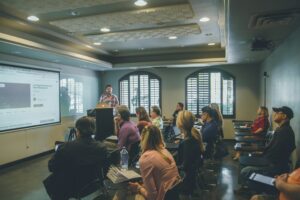 To offer health and care providers flexibility and choice, FRT have also developed their own Tier 2 Mandatory Autism and Learning Disabilities Training package.
Fully mapped to the core capabilities framework, Oliver McGowan Mandatory Training Code of Practice and externally accredited, this package offers providers an efficient, affordable alternative solution.
The training is designed to meet statutory standards and equip health and social care staff to deliver more empathetic, person-centred support.
A trainer at FRT explains:
“This isn’t just about compliance. It’s a chance to improve outcomes, reduce bias, and truly understand the lived realities of autistic individuals and people with learning disabilities, helping to improve care and support and prevent avoidable deaths.”
You can learn more about how FRT developed this training package here.
For further information on other types of neurodiversity training, visit their webpage or download the brochure.
You can contact FRT via freephone 0800 310 2300, send an e-mail to info@firstresponsetraining.com or submit an online enquiry.