
The Health and Safety Executive (HSE) has confirmed its plans to strengthen asbestos safety standards following a public consultation.
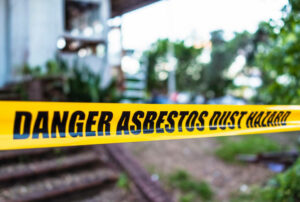 Britain’s health and safety watchdog has published its response to a consultation on proposals to strengthen the existing regulatory framework for managing asbestos.
The consultation ran for two months from November 2025 until January 2026 and received 358 responses. It was exploring three proposals for amendments to the Control of Asbestos Regulations 2012 (CAR 2012).
These proposals, aimed at reducing the risk of exposure to legacy asbestos, were:
- Proposal to ensure the independence and impartiality of roles in the four-stage clearance process
- Proposal to improve the quality of asbestos surveys
- Proposal to clarify the type of work that constitutes work with asbestos known as Notifiable Non-Licensed Work (NNLW)
These points represent the three outstanding recommendations made by the 2022 Work and Pensions report on the HSE’s approach to asbestos management.
Why do we need strengthened asbestos safety standards?
 The use of asbestos in building construction was banned in Great Britain in 1999, but it remains a high risk today because of its widespread use before this point.
If asbestos-containing materials (ACMs) in buildings are not properly managed in accordance with national standards and guidance, people who visit or work in these buildings could be exposed to the deadly fibres and may become ill as a result.
Inhaling the fibres can cause cancers such as mesothelioma and lung cancer, but it can take as long as 20-30 years after exposure for symptoms of disease to appear.
Because of this, asbestos exposure remains the single greatest cause of work-related deaths in Great Britain, killing around 5,000 people each year.
Key regulatory changes following consultation on asbestos safety standards
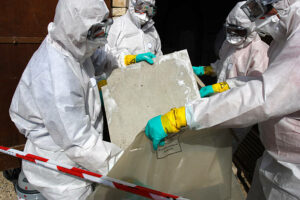 The HSE have confirmed that the responses received to the public consultation on asbestos safety standards have led to it making key regulatory changes.
In line with proposal 1, the watchdog will strengthen independence and impartiality in the four-stage clearance process and they will amend regulation 20 of CAR 2012, which covers standards for air testing and site clearance certification. This will remove the potential conflicts of interest that may arise when the LARC appoints the asbestos analyst.
Later this year, the HSE is also set to update the Approved Code of Practice and guidance (L143) Managing and working with asbestos – HSE and Asbestos: The Analyst’s Guide – HSE.
They have already developed simple online guidance to support dutyholders in appointing third-party service providers with confidence.
The industry now has 12 months to comply with the regulatory changes implemented by the watchdog.
The HSE confirms that it still strongly recommends that dutyholders should use accredited organisations when commissioning asbestos surveys and is developing further guidance and interventions to assist dutyholders to understand the critical role a quality survey plays in managing asbestos safety risks.
In response to proposal 3 of the consultation, the HSE has advised that the category of work known as Notifiable Non-Licensed Work (NNLW) will be retained. They will work collaboratively with industry to develop improved guidance to support the correct use of this category.
Behaviours and competence are key to asbestos safety
 The watchdog reported that, across all three proposals to strengthen asbestos safety standards, the responses received consistently pointed to behaviours and competence, particularly around dutyholder understanding of their responsibilities under the regulations, commissioning practices, and the practical application of regulatory requirements.
The HSE plans to use this evidence to inform the development of further interventions and guidance for asbestos safety.
The Director of Engagement and Policy at HSE, Rick Brunt, thanked all those who responded to the consultation to strengthen asbestos safety standards and said the “substantial evidence” gathered would aid them to “develop a greater understanding of the issues that underlined each of the proposals and to help support policy development and decision-making.”
He added:
“We are now able to confidently strengthen asbestos safety regulations and make changes to guidance that will help us deliver on our commitment to reduce asbestos exposure across Great Britain.”
Working to improve ‘the safety of our workers’
Meanwhile, Sir Stephen Timms, the Minister for Social Security and Disability, commented:
“The dangers of exposure to asbestos are well known. It’s terrible legacy from its use in the past remains a risk for many people in the present.
“To protect people in Britain, we have a mature and well-established approach to the management of asbestos in buildings.
“Today we are strengthening this protection to improve the safety of our workers and the public from asbestos exposure.”
HSE’s publication of the consultation response comes after the laying of a Statutory Instrument in parliament to amend the regulations which will come into force on 24th November 2026, and industry then has a year to comply before the watchdog will being enforcing the change in November 2027.
In a press release, the HSE said they would “continue to monitor and evaluate the effectiveness of these changes once implemented.”
Training to maintain asbestos safety standards
 First Response Training (FRT) is a leading, national training provider.
They deliver over 7,000 courses each year in the fields of health and safety, first aid, fire safety, food safety, mental health, health and social care and other special focus topics.
Their diverse portfolio includes training awards in Asbestos Awareness, Handling Hazardous Substances (COSHH) and Managing and Supervising Risk.
A trainer from FRT explains:
“Exposure to asbestos fibres can be extremely hazardous, with long lasting and devastating consequences.
“It’s vitally important that all people with responsibilities for premises understand the dangers and are aware of the appropriate safety measures they must take to minimise the risks of exposure and protect themselves, their employees, colleagues, clients and members of the public from harm.
“Responsibilities include remaining up to date on, and complying with, the latest safety standards and regulatory requirements.”
For more information on the training that FRT can provide, please call them today on freephone 0800 310 2300 or send an e-mail to info@firstresponsetraining.com.