
Ofsted has dropped guidance for inspectors which linked autism and extremism after campaigners condemned it as “offensive,” “unfounded” and “clumsy.”
 The campaign, backed by public figures such as the naturalist and TV presenter Chris Packham, has led to the Ofsted training manual used to teach inspectors being updated to remove this “unfounded and tenuous” guidance.
Ofsted is the public body which monitors and safeguards education standards in England. The document in question was its Inspection Safeguarding Session – Prevent Extract 2024. An education minister confirmed that this document has now been updated so that it “no longer includes reference to children with autism.”
The training manual was first identified by the human rights group Rights & Security International, who said the teachings “draw a target on autistic children.”
Ofsted manual claimed autistic children at ‘increased risk’ of extremism
 These concerns were picked up by the Guardian newspaper, which published an article in June 2025 highlighting that the Ofsted training manual contained guidance suggesting that autistic children were “at increased risk of being susceptible to extremism.”
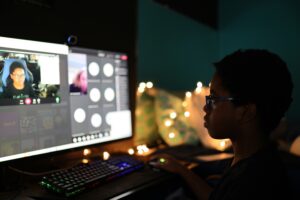
The guidance suggested that an autistic child’s tendency to “develop special interests” meant they were more vulnerable to extremism.
It included the following wording:
“Due to this and any social communication needs, children with autism are more likely to experience social isolation and so use the internet as a way to find friends. They trust the information they read and the ‘friends’ that they find online and so can be drawn into extremism.”
At the time, Ofsted defended the guidance, saying that its training provides an understanding of different circumstances in which children might be more susceptible to extremism.
But there were growing concerns over the number of autistic children being referred to Prevent, the government’s deradicalisation programme.
Leading charity the National Autistic Society said the guidance risked stigmatising common autistic traits.
Campaign against ‘discriminatory and inaccurate’ guidance
 The campaign against the guidance was led by Dr Mine Conkbayir MBE, a researcher and early years specialist, who first raised her concerns to Ofsted, requesting that they remove the “discriminatory and inaccurate statement,” before highlighting the issue through the UK media.
In a post shared on LinkedIn last year, Dr Conkbayir said:
“The NSPCC does not even include autistic children in their list of those at particular risk of being drawn into extremism/radicalisation. Such tenuous and unfounded correlations are not about safeguarding any child. This is an exercise in profiling and must be stopped before even more autistic children are discriminated at school.”
The subsequent campaign included demonstrations supported by Chris Packham, who has been diagnosed with autism, and the comedians Paul Whitehouse and Johnny Vegas. Packham urged Ofsted to drop the guidance “before even more young people are discriminated against in school and in society.”
Ofsted Prevent guidance no longer links autism and extremism
 And it seems they have listened; in a recent response to a parliamentary question, Josh MacAlister, a junior education minister, revealed that updated training for Ofsted inspectors on the Prevent duty no longer makes links between autism and extremism.
Dr Conkbayir said confirmation that the guidance had now been scrapped was “fantastic news.”
She added in a social media post:
“Autistic children are not threats. They are children.”
When the news of the updated guidance broke, Paula McGowan OBE, mother of Oliver MGowan, wrote on social media:
“I am flabbergasted. Could Ofsted be more ignorant?”
Meanwhile, a spokesperson for Ofsted emphasised:
“Ofsted does not – and has never – labelled children with autism as ‘likely extremists’, It is preposterous to suggest otherwise. An old piece of training for inspectors highlighted that some vulnerable children could be more susceptible to manipulation. We have recently renewed our school inspection framework. This new framework required new training for inspectors, including updated training on the Prevent duty.”
Autism training, support and guidance
First Response Training (FRT) was one of the first training providers in the country to be approved to offer essential training in line with the Oliver McGowan Mandatory Training on Learning Disability and Autism.
 They are quality assured to deliver Oliver’s Training through the Quality Assured Care Learning Service (QACLS) from the Department of Health and Social Care and Skills for Care.
The national training provider aims to empower and educate staff to transform their practice by embracing the lived experiences of autistic individuals and those with learning disabilities. Through the collaborative strength of their trios—facilitating trainers and experts with lived experience — FRT aims to inspire lasting change in how individuals are understood, supported, and valued.
If you want to learn more about the Oliver McGowan Mandatory Training Framework, you can book a free consultation with their Project Lead, Perry Leeks, to find out all about the programme and how FRT can address the needs of your organisation and staff.
FRT are hosting a series of open, public Tier 2 courses in London, Manchester and Birmingham in the coming months. You can book a space on any of these courses online now. They also offer open Tier 1 webinar sessions.
FRT have also developed a free-to-download quick guide to the new Oliver McGowan draft code of practice.
This guide explains what the new code of practice means for health and social care providers, how to stay current, and how to meet new legal duties.
You can also download FRT’s free Oliver McGowan Mandatory Training brochure.
Providing an alternative training solution
 To offer health and care providers flexibility and choice, FRT have also developed their own Tier 2 Mandatory Autism and Learning Disabilities Training package.
Fully mapped to the core capabilities framework, Oliver McGowan Mandatory Training Code of Practice and externally accredited, this package offers providers an efficient, affordable alternative solution.
Please note that, while fully interactive, this webinar-based training solution does not meet the code of practice’s requirement for the training to be ‘face-to-face’.
The training is designed to meet statutory standards and equip health and social care staff to deliver more empathetic, person-centred support.
A trainer at FRT explains:
“This isn’t just about compliance. It’s a chance to improve outcomes, reduce bias, and truly understand the lived realities of autistic individuals and people with learning disabilities, helping to improve care and support and prevent avoidable deaths.”
You can learn more about how FRT developed this training package here.
Autism and neurodiversity training for schools
 FRT have recently co-developed a focused training session on Neurodiversity and Inclusive Practice in Education, which will be co-delivered with Experts with Lived Experience and which they have tested extensively in partnership with The Tapscott Learning Trust, an award-winning trust based in London.
The Neurodiversity and Inclusive Practice in Education programme is a co-produced school improvement programme designed to help schools strengthen inclusive practice and improve outcomes for neurodivergent and SEND pupils, whether formally diagnosed or not.
Developed by education leaders and Experts with Lived Experience of autism, ADHD and PDA, the programme supports schools to improve attendance, engagement, wellbeing, belonging and attainment through adaptive teaching, reasonable adjustments and whole-school culture change.
Inspired by the nationally recognised Oliver McGowan Mandatory Training on Learning Disability and Autism, which has trained millions of healthcare professionals across England, the programme combines lived experience, practical strategies, implementation support and impact evaluation to create meaningful and lasting change within education settings.
It also supports schools to develop their Inclusion Strategies and strengthen collaboration with local education, health and care services, helping to create environments where every child feels understood, valued and able to thrive.
Learning outcomes include:
- Explain neurodiversity and common co-occurring profiles
- Recognise early indicators of dysregulation and unmet need
- Understand why autism and other neurodiverse conditions are described as
- Invisible
- Reflect on your own values, beliefs and practice
- Recognise potential differences, strengths and challenges for neurodiverse pupils
- Identify reasonable adjustments and ways to adapt your practice
- Record the impact
Moving beyond awareness to ‘meaningful change in practice’
Perry Leeks, Project Director at FRT, says:
“We were so excited and privileged to collaborate with members of the neurodiverse community to develop a special programme for the education sector that specifically addresses a very real need, meets key criteria outlined in the Schools whitepaper, and helps teachers reflect on and enhance their practice and the support they offer.”
Daniel Mansfield, Training Hub Director at The Tapscott Learning Trust, added:
“One of the most powerful aspects of this programme is that it moves beyond awareness and focuses on meaningful change in practice.
“Throughout the pilot phase, we saw staff develop a deeper understanding of neurodiversity, reflect honestly on the barriers pupils face and identify practical adaptations that could be implemented immediately.
“The ‘One Child in Mind’ approach helps bring the learning to life, ensuring discussions remain rooted in the experiences of real children rather than abstract theory.
“What stood out most was the impact of learning directly from Experts with Lived Experience, which consistently challenged assumptions, increased empathy and inspired action. Schools left not only with greater confidence and understanding, but with tangible plans to improve inclusion, strengthen relationships and create learning environments where all children can thrive.”
Download our flyer to find out more about Neurodiversity and Inclusive Practice in Education.
For further information on other types of neurodiversity training, visit FRT’s webpage or download the brochure.
You can contact FRT via freephone 0800 310 2300, send an e-mail to info@firstresponsetraining.com or submit an online enquiry.