
A new report has highlighted how up to 7 in 10 neurodivergent pupils experience severe mental health issues at school.
 The report’s authors argue that mental health support for neurodivergent pupils should be viewed as a “reasonable adjustment” to help prevent escalating needs.
The charity Centre for Mental Health recently released a report, Strengths-based support for neurodivergent children and young people, which identifies high rates of poor mental health among this group and recommends a series of reforms to address this.
After analysing research from the University of York, the authors found that up to 70% of neurodivergent children and young people experience severe mental health issues at school, with a particularly high prevalence evidenced among autistic girls and young people from racialised communities.
School mental health support fails to meet needs of neurodivergent pupils
 The charity found that current mental health support in schools often fails to meet their needs and they are calling for a system that better reflects the realities of pupils’ lives, including clear recognition of neurodivergent strengths.
The report asserts: “Mental health support for neurodivergent children and young people should be seen as a reasonable adjustment, not a treatment for difference.”
The 5 key recommendations made in the report include:
- Government and NHS England must ensure that the expansion of school and college Mental Health Support teams includes individualised provision for neurodivergent students
- NHS Children and Young People’s Mental Health Services should also be adapted to meet the needs of neurodivergent young people with co-occurring mental health needs
- The Department of Health and Social Care should ensure that the forthcoming Modern Service Framework for Children and Young People includes the requirement for mental health support for neurodivergent children and young people to be individualised, adapted and evidence-based.
- The Department for Education should review how schools and colleges can be better adapted to the needs of neurodivergent children and young people.
- Funding should prioritise research exploring how to scale up promising approaches to meet the mental health needs of neurodivergent children and young people.
The report also calls for investment in sensory-informed and play-based approaches to enhance communication and reduce isolation for neurodivergent children. The authors also suggest that school-based assessment pathways would give quicker access to screening, early specialist input and clearer support, reducing diagnostic delays.
Introducing psychoeducation, which combines cognitive-behavioural therapy, group therapy and education, as part of autism specialist pathways could also improve outcomes.
Services must adapt to neurodivergent pupils, not the other way around
 The report has coincided with the publication of the government’s new Schools Whitepaper addressing special educational needs and disabilities (SEND) reform and an independent review into mental health conditions, ADHD and autism.
The Centre for Mental Health’s Chief Executive, Andy Bell, said that services needed “to adapt to neurodivergent children’s communication styles rather than expecting children to adjust to them,” and added:
“And neurodivergence should never be a reason to exclude a child from a mental health service.
“The research we have reviewed from the University of York demonstrates that, by following the available evidence, mental health support for neurodivergent children and young people can be effective and make a difference.”
Meanwhile, the Chair of Child and Adolescent Psychiatry at Hull York Medical School, Bernadka Dubicka, said timely support is often lacking because of a failure to recognise needs in the first place, explaining that “far too many neurodivergent children and young people are either languishing on waiting lists for diagnostic assessments, or are not even identified as needing assessment, until they fall into crisis.”
She added:
“There is an urgent need to not only scale up the level of adaptation provided in education and mental health services, but also to put in place systems to identify the needs of neurodivergent children early, so they are not set up to fail in an unsupported secondary education environment.”
Training and support for neurodiversity
 First Response Training (FRT) is a leading national training provider delivering courses in subjects such as health and safety, first aid, fire safety, manual handling, food safety, mental health, health and social care, safeguarding and more.
They work with a wide range of childcare providers, schools and colleges to provide tailored training for those who work with children and young people.
They are a Disability Confident Committed Employer and were recently awarded INclusive Worcestershire Leader status. This means they are a fair, equitable and inclusive employer who is proactively and continuously striving for positive change.
As one of the first training providers approved to deliver the Oliver McGowan Mandatory Training on Learning Disability and Autism, they work with many Experts with Lived Experience of autism and learning disabilities across the UK.
These Expert Co-Trainers are recruited and supported by a specialist team at FRT, who ensures that reasonable adjustments specific to each Expert Co-Trainer are maintained throughout their employment.
FRT are now accredited under the Quality Assured Care Learning Service from Skills for Care to deliver Oliver McGowan Mandatory Training.
They are also an approved provider of Oliver’s Training via the Training and Development Services framework delivered by the NHS Collaborative Procurement Hub. This provides a fully compliant, pre-approved route to market for all NHS organisations, part or fully government funded organisations and blue-light services.
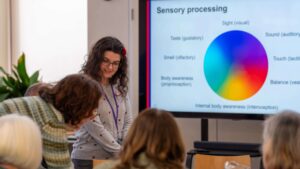
FRT have also developed and delivered a number of Neurodiversity training courses, such as Introduction to the Autism Spectrum, ADHD Awareness, Dyslexia Awareness, Sensory Processing Disorder Awareness and SEND Awareness.
They have also previously worked in partnership with clients to develop bespoke training for them in topics such as Adapting Learning for SEND and, SEND and Barriers to Learning.
Neurodiversity and adaptive practice
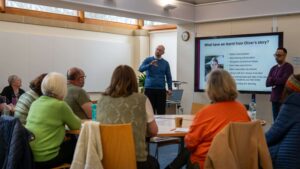 Most recently, FRT have co-developed a focused training session on Neurodiversity and Adaptive Practice for schools, which will be co-delivered with Experts with Lived Experience and which they are currently piloting with the Tapscott Learning Trust, an award-winning trust based in London.
The 3-hour training session aims to inspire education staff to make learning more accessible for neurodiverse pupils by embedding reasonable adjustments through adaptive, inclusive practice.
Learning outcomes include:
- Explain neurodiversity and common co-occurring profiles
- Recognise early indicators of dysregulation and unmet need
- Understand why autism and other neurodiverse conditions are described as
- Invisible
- Reflect on your own values, beliefs and practice
- Recognise potential differences, strengths and challenges for neurodiverse pupils
- Identify reasonable adjustments and ways to adapt your practice
- Record the impact
Perry Leeks, Project Director at FRT, says:
“We were so excited and privileged to collaborate with members of the neurodiverse community to develop a special programme for the education sector that specifically addresses a very real need and helps teachers reflect on and enhance their practice and the support they offer.”
Download an information leaflet to learn more about the taster sessions FRT are hosting with the Tapscott Learning Trust.
For more information, contact FRT on freephone 0800 310 2300 or send a e-mail to info@firstresponsetraining.com.