
The latest CQC State of Care report presents a “mixed picture” across health and adult social care, with the watchdog describing experiences of care as “fractured” and “heavily dependent” on where people live and who they are.
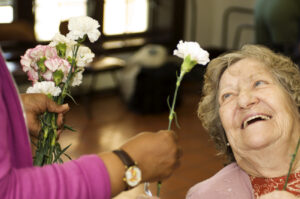 The Care Quality Commission (CQC) has published its State of Care 2025-26 report – its annual assessment of healthcare and social care in England.
The annual report identifies key trends, shares examples of good and outstanding care, and highlights the areas where care needs to improve. This year, the CQC says it reveals a social care market “in flux.”
It says the social care sector in England is “changing shape rapidly, but without a clear destination,” and also highlights persistent inequalities across the whole system.
Key findings include:
- Demand for health and adult social care services continues to grow
- Needs are often becoming more complex, particularly in community mental health services
- There are signs of improvement, including more GP appointments, greater use of digital solutions and reduced wait times for elective care
- There are examples of local innovation, including neighbourhood models and integrated teams
- Almost three-quarters of the care sector is rated as good or outstanding, but leadership is the area most in need of improvement
Despite signs of improvement, the CQC warns the sector is “struggling to keep pace with rising demand.”
State of Care report finds “unwarranted variation”
 Key problems include variation in access to services, the quality of care received and the outcomes for people across every part of the regulated health and care system in England.
The CQC says that children and young people are enduring some of the sharpest increases in both need and waiting times. For example, the number of children waiting for their first contact with mental health services increased by almost a third (31%) in just two years, while over 80,000 children and young people have been waiting over a year for community health services. To make matters worse, health visitor and school nursing numbers continue to fall despite this growing demand, compromising the ability of services to identify needs or safeguarding concerns early.
The State of Care report also highlights how those from the most deprived areas continue to experience the worst care outcomes.
Social deprivation was linked to increased hospital admission rates for children and young people with conditions like bronchiolitis, asthma and diabetes, and higher levels of tooth decay.
This “unwarranted variation” was found across the health and care system. For instance, the CQC found variation in maternal readmissions by ethnicity, reflecting entrenched disparities in maternal safety for black women.
A rapidly changing social care market
The State of Care report reveals a social care market which is changing rapidly.
 The CQC says the varying levels of planning and strategy by local authorities, alongside fragile funding models, have left care providers and Councils exposed to pressures that are “reshaping the market by accident rather than design.”
A number of small providers are entering the homecare market, causing it to fragment, just as care homes are consolidating, with institutional investors acquiring homes.
The care watchdog reports that its local authority assessments have demonstrated that positive and effective commissioning of services “is one of the most powerful levers to drive quality, equity and sustainability in social care.”
They have found excellent examples of local authorities working collaboratively with care providers and the people who use services to shape the local market and tackle health inequalities. This includes the development of more local provision to reduce reliance on care placements outside the locality and a strong reablement service to reduce the number of people requiring ongoing support a year after leaving services.
However, some local authorities are struggling to meet people’s needs and care providers are forced to seek people who can self-fund their care in order to remain financially viable.
The CQC says this “risks reducing choice and capacity for people who rely on council-funded support, which is already subject to significant regional variation.”
There have been improvements in social care staffing, with the workforce experiencing a slight drop in vacancy and turnover rates, but the CQC says there are still serious concerns about the reduction in international recruitment.
A clearer vision needed for adult social care
 The Chief Inspector of Adult Social Care and Integrated Care at the CQC, Chris Badger, highlighted that the sector was “changing shape rapidly.”
He explained that the “sharply divergent trends” of the availability of care home beds concentrating in large homes while homecare services fragment into a growing number of smaller providers are reshaping the sector “largely by accident rather than design.”
He said the shifts were due to economic pressures and the varying abilities of different local authorities to plan for and shape the care their communities need.
He commented:
“A clearer vision is needed. In addition to the sustainable funding solution CQC has consistently called for, commissioning needs to improve so the market can be shaped around what’s best for people, and in a way that ensures care staff can be employed fairly.
“Our assessments of local authorities have found that done well, commissioning can help build more resilient care markets where more people are helped to stay out of hospital and get care closer to home. Investment in leadership capability is also needed – well-led services deliver safer, better care.”
Speaking specifically of the need for sustainable funding, he added:
“Ten years ago, we warned that adult social care was approaching a tipping point. Successive governments have not resolved the issue of long-term funding for the sector. Now, this government’s renewed focus on social care offers an important opportunity for meaningful solutions in social care that improve outcomes across the whole health and care landscape – but only if reforms address workforce, funding, commissioning, prevention and inequalities together.
“None of this can be considered in isolation. Pressures in one part of the system compound others and are exposing fractures right across health and care, from mental health support to maternity and primary care, and in widening inequalities for children and young people.
“Success can’t be measured by how well each part of the system performs on its own – its how well those parts work together for the people who need them, regardless of who they are or where they live.”
State of Care report reveals connected pressures requiring a ‘collective response’
Baroness Julia Neuberger, Chair of the health and care watchdog, agreed that the State of Care report revealed “a health and care system under real strain, but one where some things are also working well.”
She said that improvements seen in some areas of the system “aren’t keeping pace with demand everywhere, and where they fall short, it’s often the same people and places bearing the consequences.”
Calling for a “collective response” to the challenges faced by the sector, she added:
“What strikes me most is how connected these pressures are. Challenges in social care provision are contributing to delays in hospital discharge. Gaps in community mental health provision are pushing more people towards crisis care.
“To repair a fracturing system, there must be a collective response. Providers, regulators, commissioners and government all have a role to play in improving care, and we’ll be judged not by what we achieve alone, but by what we achieve together.”
She said the CQC was “committed to playing our part,” and vowed:
“We’ll be drilling down in the areas that give us cause for concern, drawing on what we hear from people who use health and care services, as well as from their families and carers, and what we see through our regulatory work.”
Training and support for health and social care
 First Response Training (FRT) is a leading, national training provider.
They deliver over 7,000 courses each year in the fields of health and safety, first aid, fire safety, food safety, mental health, health and social care and other special focus topics.
Their diverse portfolio includes training awards designed for care workers, such as Learning Disability Awareness, Understanding Autism, Oliver McGowan Mandatory Training, Positive Behaviour Support, Safeguarding Adults, Equality, Diversity and Inclusion, Person Centred Care and Support and many others.
Their course portfolio spans Care Certificate standards, mandatory training awards, clinical skills, special focus courses and training for supervisors and managers.
A Trainer at FRT, says:
“We know that the health and social care sector faces multiple challenges. We hope that a sustainable funding solution can be reached and that coordinated work across services can help to reduce inequalities, improve access to care and boost outcomes for all. The priority must always be high quality, safe, effective and compassionate care for every person who accesses care services.
“Tailored training and development solutions can help ensure staff are focused on patient safety and empowered to deliver high quality care.”
You can contact FRT via freephone 0800 310 2300, send an e-mail to info@firstresponsetraining.com or submit an online enquiry.