
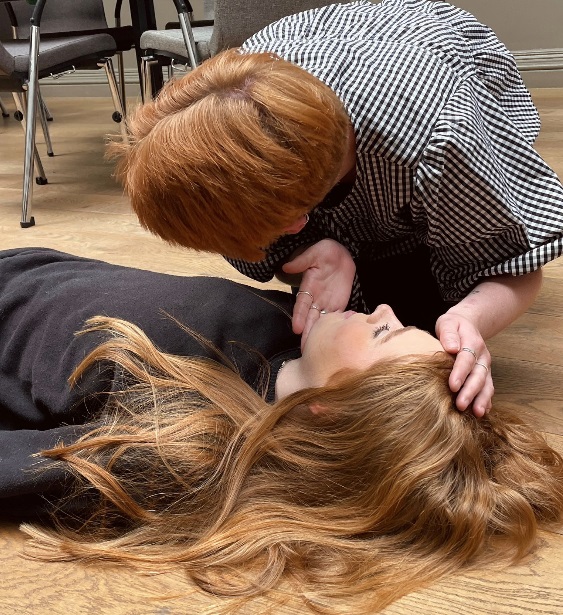
What is the difference between First Aid at Work and Emergency First Aid at Work?
Choosing the right first aid training is an important responsibility for any employer. Whether you manage a small office, a busy hospitality venue or a higher-risk industrial workplace, having appropriately trained first aiders can make a significant difference when an accident or medical emergency occurs.
Two of the most common workplace qualifications are First Aid at Work (FAW) and Emergency First Aid at Work (EFAW). Although both provide essential lifesaving skills, they differ in the depth of training and the range of situations they prepare learners to manage.
So, which one does your business need?
What is Emergency First Aid at Work (EFAW)?
Emergency First Aid at Work is an introductory workplace first aid qualification designed to equip employees with the knowledge and practical skills needed to respond to an emergency.
It is particularly suitable for lower-risk working environments where the likelihood of serious injuries is relatively low.
An Emergency First Aid at Work course typically covers:
- Understanding the role and responsibilities of a workplace first aider.
- Assessing an emergency situation and responding appropriately.
- Managing an unconscious casualty.
- Performing CPR and using an automated external defibrillator (AED).
- Responding to choking incidents.
- Managing bleeding and shock.
- Recognising and responding to common medical emergencies.
The course is typically delivered over one day and combines theoretical learning with practical exercises and assessment.
What is First Aid at Work (FAW)?
First Aid at Work is a more comprehensive qualification that builds on the knowledge covered in Emergency First Aid at Work.
It is designed for workplaces where the risks are greater, where employees undertake more hazardous activities or where the nature of the business requires a broader level of first aid provision.
A First Aid at Work course covers the core emergency response skills, alongside a wider range of injuries and illnesses.
Topics include:
- Assessing an incident and managing an emergency.
- CPR and the use of an AED.
- Managing unconscious casualties and choking.
- Dealing with bleeding, shock and wounds.
- Recognising and responding to fractures and other injuries.
- Managing burns and scalds.
- Recognising common medical conditions and emergencies.
The full qualification is typically delivered over three days.
First Aid at Work vs Emergency First Aid at Work: Key differences
| Feature | Emergency First Aid at Work | First Aid at Work |
|---|---|---|
| Course duration | 1 day | 3 days |
| Level of training | Basic emergency response | Comprehensive workplace first aid |
| CPR and AED | Yes | Yes |
| Unconscious casualties | Yes | Yes |
| Bleeding and shock | Yes | Yes |
| Wider range of injuries and illnesses | Limited | Yes |
| Typical workplace | Lower-risk environments | Higher-risk or more complex environments |
Both qualifications are generally valid for three years, after which an appropriate requalification course is required.
Which first aid course does my business need?
There isn’t a single answer that applies to every business.
Under the Health and Safety (First-Aid) Regulations 1981, employers must make appropriate first aid arrangements for their employees. This includes assessing workplace risks and ensuring adequate and appropriate equipment, facilities and personnel are available.
Your first aid requirements should be determined through a first aid needs assessment.
When deciding which qualification is appropriate, employers should consider:
1. The nature of your workplace
An office environment is likely to have different first aid requirements from a construction site, warehouse, factory or hospitality venue.
2. The number of employees
The size of your workforce and the number of people working at any one time will influence how many trained first aiders you may need.
3. Workplace risks
Consider the types of accidents or injuries that could occur. Higher-risk activities may require more comprehensive first aid provision.
4. Working patterns and locations
If employees work across multiple sites, shifts or remote locations, you need to ensure suitable first aid provision is available wherever work is taking place.
5. Previous incidents
Your accident records can help identify recurring risks and whether additional first aid training may be beneficial.
Does every workplace need a First Aid at Work qualification?
No. The level of training required will depend on the findings of your first aid needs assessment.
For some lower-risk workplaces, Emergency First Aid at Work may provide an appropriate level of training.
Other environments may require fully qualified First Aid at Work personnel, alongside additional specialist training to address specific workplace risks.
Employers should also remember that there is no fixed statutory ratio of first aiders to employees. The appropriate number depends on the individual workplace circumstances.
Can you complete First Aid at Work training with First Response Training?
At First Response Training, we deliver a range of accredited first aid qualifications designed to help businesses develop confident, capable first aiders.
Our courses include:
- Level 3 Award in Emergency First Aid at Work.
- Level 3 Award in First Aid at Work.
- First Aid at Work Refresher.
- Emergency First Aid at Work with additional specialist options.
Training can be arranged for individual learners or delivered to groups at your workplace, helping businesses minimise disruption while ensuring employees receive relevant, practical training.
With experienced trainers located across the UK, we can support organisations in a wide range of sectors.
Find the right first aid training for your business
Choosing the right qualification is about more than simply meeting your responsibilities. It is about ensuring your employees have the knowledge and confidence to respond when someone needs help.
If you’re unsure which course is right for your organisation, speak to First Response Training. View our courses here – www.firstresponsetraining.com/first-aid-courses
Get in touch today to discuss your workplace first aid requirements and find the right training for your team.
Links;
