
The start of a New Year often refocuses the mind, sparking us to consider our priorities and objectives for the months and years ahead. For many organisations, and individuals, these will include key learning and development goals.
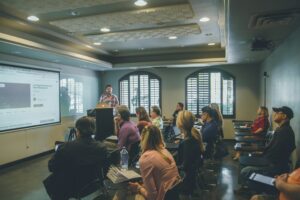 Supporting and promoting staff learning and development is essential for businesses, enabling them to build a skilled, motivated and resilient workforce that can help achieve business goals and maximise client satisfaction.
Benefits also include increased staff satisfaction, lower turnover rates and a boost to recruitment and company reputation.
Access to regular learning and development opportunities has been consistently shown to be key to attracting, recruiting and retaining top talent across industry sectors.
Types of learning and development to prioritise in 2026
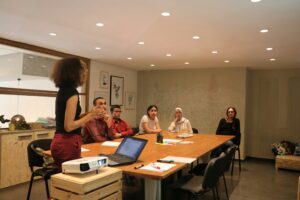 Staff learning and development can encompass training in mandatory knowledge such as national health and safety and key industry standards, specific technical skills, personal skills and more long-term career progression pathways.
Training can take the form of short, stand-alone training courses, online modules, distance learning programmes, apprenticeships, work placements and coaching and mentoring.
Employers can support workforce learning and development through resources such as roadmaps, toolkits and effective supervision.
The key areas in which employers can proactively support learning and development for their staff include:
- Statutory training – most job roles require some form of statutory training, such as health and safety training, and training in subjects such as First Aid at Work can also be a key requirement. In addition, training aligned to other national standards and legislation will also likely be required, such as Data Protection and Equality, Diversity and Inclusion
- Career progression – provide clearly defined routes for advancement in the organisation, from entry-level to registered roles, where appropriate, and use frameworks and apprenticeships where possible
- Technical skills – staff will often require industry and occupation-specific training to enable them to complete core tasks. This may range from induction or foundational training to higher level or registered practice, where relevant.
- Personal and life skills – it is beneficial for businesses to also support their staff to develop and enhance core functional skills, resilience, communication, empathy and problem-solving. Subjects such as emotional intelligence can be key, particularly for managerial roles
- Mental health and wellbeing – supporting the mental and emotional health and welfare of your workforce is vital, particularly in light of the fact that work-related stress, depression and anxiety accounts for half of all cases of work-related ill-health and over 20 million lost working days each year, according to HSE statistics
Tools to support positive learning and development
 Once you’ve identified the relevant areas of learning and development for your workforce, it’s important that you have effective tools and strategies in place to support staff members to complete this training. These could include:
- Roadmaps and frameworks to provide staff with structured guides for skills development across different areas. There could be frameworks specific to your industry sector
- Toolkits and resources, such as practical guides, role descriptions and signposting to further education
- Effective supervision and regular personal development reviews (PDRs) to help identify strengths, needs, personal goals and aspirations and set objectives
- Induction packs to ensure vital training and information is included in employee onboarding processes and that learning goals are identified early on
- Partnerships with other employers, training providers and professional bodies to ensure consistent development
Identifying relevant training and categorising it depending on whether it is statutory, mandatory, technical, personal or linked to advancement can be helpful. You can then identify which courses from these categories are applicable to each job role, and this information could be integrated into role profiles and induction packs.
Key responsibilities of employers
When it comes to staff learning and development, employers and managers have key responsibilities, including:
- Identifying the learning and development needs of the workforce. Supervision is key to identify learning gaps and highlight strengths
- Ensuring safe delegation of tasks by providing suitable training and confirming competency and understanding
- Providing relevant resources and making training accessible
- Promoting career progression, by making pathways visible and supporting staff to access career opportunities.
Learning and development opportunities can be linked to career advancement, enhanced pay and rewards, where applicable.
Learning and development strategies to adopt in 2026
 In 2026, employers can support effective staff learning and development by taking a person-centred, skills-first approach and offering flexible, tailored learning solutions. Its also vital to provide continuous feedback and foster a culture of positive workplace wellbeing.
Learning does not need to be limited to formal training courses and can also become a key and permanent part of the workflow through actions such as regular coaching, career mapping and connecting personal development directly to business impact.
Some key learning and development strategies for managers to adopt this year include:
- A skills-first approach: focus on practical skills over generic competencies and embed learning into daily working life through agile, accessible methods rather than relying solely on formal courses
- Use AI tools to suggest tailored learning paths based on individual goals and skills
- Provide continuous feedback and ongoing coaching, offering real-time guidance to ensure learning and development align with performance
- Create a learning culture in the workplace, encouraging the sharing of knowledge and rewarding growth to highlight learning and development as a core value and priority
- Prioritise employee wellbeing, ensuring a safe environment where employees feel comfortable discussing their needs and goals, taking risks, asking for help and disclosing skills gaps. When people feel emotionally secure, they will be more engaged and perform better
- Help employees to create career roadmaps that link their goals and aspirations to specific skills and roles within the organisation, helping to identify progression pathways and relevant training
- Integrate learning into your workflow by designing solutions around real-world business challenges and embedding regular reflection practices
- Empower staff to teach and learn from each other by creating workforce champions and mentors and enabling employees to share success stories
- Link individual development goals to company Key Performance Indicators (KPIs) and demonstrate the ROI of learning and development initiatives to maintain support and investment
Effective development starts with a positive mindset
 Positive and effective learning and development often starts with a happy, healthy mindset.
It stands to reason then, that supporting positive mental health and wellbeing at work is an integral part of supporting learning and development for your workforce. Promote a mentally healthy start to 2026 through:
- Proactive steps to identify, assess and manage the risk of work-related stress for your staff
- Monitoring workloads, deadlines, expectations and whether established job roles and responsibilities are aligned with real-world day to day tasks and demands
- Encouraging open and honest conversations about mental health, wellbeing and stress
- Signposting to information and support about mental health and stress
- Providing mental health awareness training and creating Mental Health Champions or Mental Health First Aiders in the workplace
- Encouraging a positive work/life balance, promoting boundaries, offering flexible working patterns and ensuring employees take their allocated leave and breaks
- Supporting generally healthy behaviours, such as encouraging workers to take regular breaks from their screens and get outside during the working day, providing access to healthy food where relevant and sharing information and advice about how following healthy behaviours can benefit physical and mental health, such as physical exercise, good quality sleep, a balanced diet, connecting with others and taking time for yourself. You can also provide additional support, such as mindfulness sessions and information about other wellbeing practices that employees could find useful
Support for your workforce learning and development goals
 First Response Training (FRT) is a leading national training provider delivering courses in a wide range of subjects, including statutory and mandatory training in health and safety, first aid, fire safety, food safety, data protection and equality, diversity and inclusion.
They also provide a range of industry-specific training for sectors such as health and social care, early years, childcare and education, hospitality and construction.
Their training programmes can be specially tailored to organisational needs and delivered via a range of flexible delivery methods, including classroom-based training, public training courses, live online webinars, interactive e-learning, distance learning manuals and blended learning solutions.
For more information on the training that FRT can provide, please call them today on freephone 0800 310 2300 or send an e-mail to info@firstresponsetraining.com.